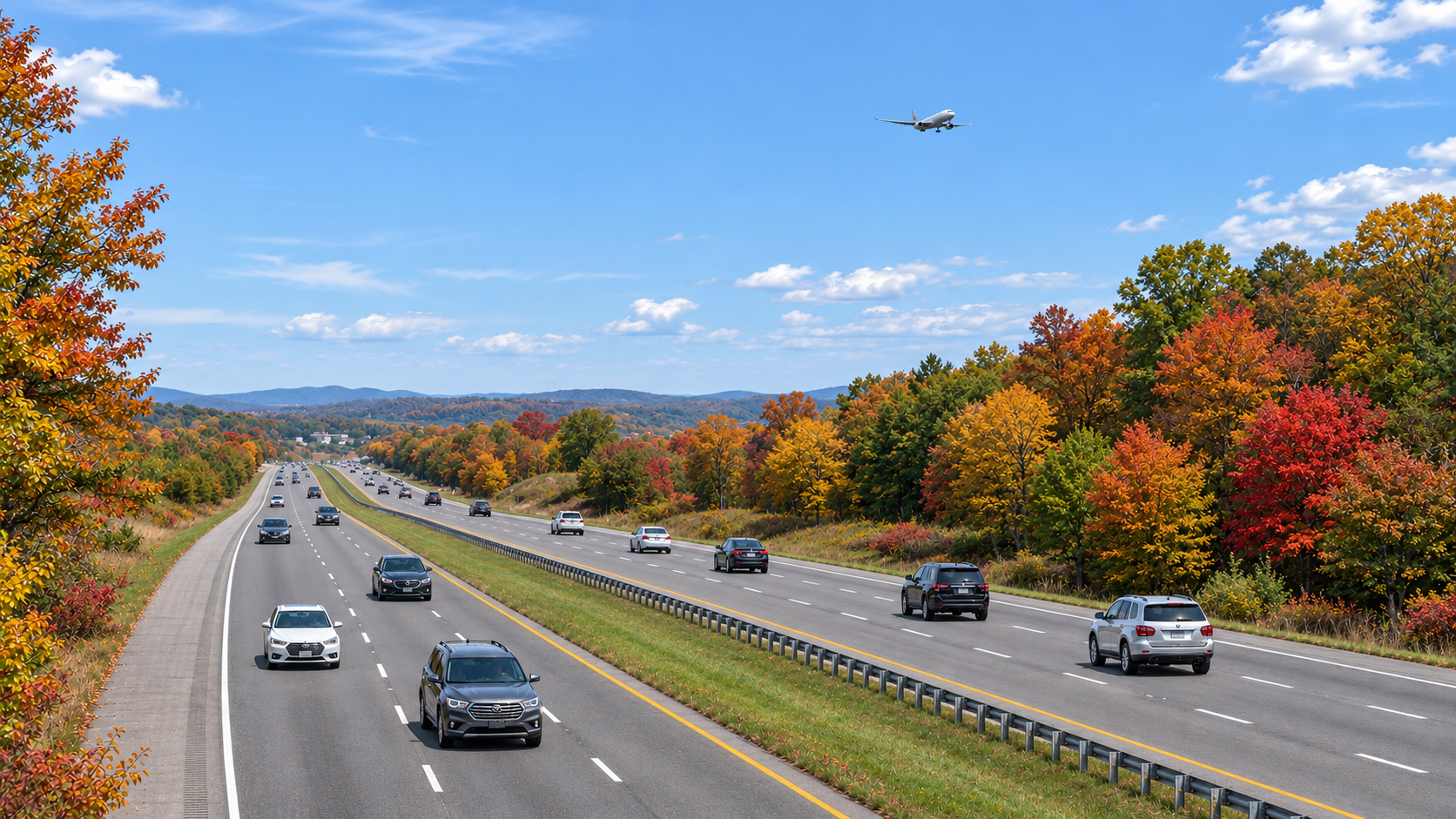
Thanksgiving travel will cost more this year, even as slightly fewer Americans hit the road and skies.
AAA projects 81.5 million people will travel at least 50 miles from home between Tuesday, Nov. 24, and Monday, Nov. 30, according to its Nov. 16 holiday travel forecast. That's about 121,000 fewer travelers than last year's 81.6 million, a 0.1% decline that ends a three-year streak of record Thanksgiving travel dating to 2023.
"After three years of record highs, the number of travelers is slightly lower partly because of higher travel costs this year," said Stacey Barber, vice president of AAA Travel. "But travelers won't notice much of a difference on the roads and at the airports, since projected volumes remain near record levels."
Airfare jumps 17%
Round-trip domestic flights averaged $800 per ticket, up 17% over last year, according to AAA booking data. AAA projects 5.96 million travelers will fly domestically, a 0.2% decrease from 2025.
That $800 figure deserves context. AAA spokesperson Aixa Diaz told Surround Sound News that it reflects a specific pool of travelers.
"$800 is the average total price our members paid when booking their Thanksgiving plans through us," Diaz said. "Most people who book through AAA Travel are going on trips to desirable, in-demand destinations, and those tend to be more expensive."
The figure does not represent a universal average for all airline passengers.
Gas prices could set a Thanksgiving record
AAA projects 72.9 million people will drive, down from 73.1 million last year. The months of August, September and October each set new monthly records at the pump, according to AAA, and November could do the same.
The national average dropped to $3.72 per gallon as of Nov. 19, according to a separate AAA fuel report. AAA said it was possible the average could fall another 15 cents by Thanksgiving Day and avoid setting a new record. The highest Thanksgiving Day national average on record was $3.58 in 2022.
Ohio drivers are paying less than most of the country. The state average was $3.19 per gallon as of Nov. 21, fourth-lowest nationally, according to Spectrum News 1 citing AAA data.
When to drive and when to stay put
Transportation data firm INRIX expects the busiest days on the road to be Tuesday, Nov. 24, and Wednesday, Nov. 25, as travelers head out. Sunday, Nov. 29, and Monday, Nov. 30, will be heaviest for return trips. Major metros like New York, Washington, D.C., Los Angeles and Boston could see more than double their normal congestion, according to AAA.
Here's the national breakdown, per INRIX data published by AAA:
- Tuesday, Nov. 24: Worst traffic 2–8 p.m. Drive before 1 p.m.
- Wednesday, Nov. 25: Worst traffic noon–7 p.m. Drive before noon.
- Thursday, Nov. 26: Minimal traffic expected.
- Friday, Nov. 27: Worst traffic 1–7 p.m. Drive before noon.
- Saturday, Nov. 28: Worst traffic noon–9 p.m. Drive before 11 a.m.
- Sunday, Nov. 29: Worst traffic noon–8 p.m. Drive before 11 a.m.
- Monday, Nov. 30: Worst traffic 2–7 p.m. Drive before 1 p.m.
"We have data for these major metro areas in the release, and we include the expected increase over regular traffic," Diaz said. Cincinnati and Dayton are not among the 16 metros in AAA's congestion table. The closest listed route is Chicago to Indianapolis via I-65 South, where INRIX projects peak congestion at 4:30 p.m. Monday, Nov. 30, with an estimated travel time of 5 hours 39 minutes, an 80% increase over typical conditions.
Weather to watch
Fox 19 reported Nov. 23 that heavy rain, gusty winds and localized flooding could disrupt Thanksgiving Day travel across the Tri-State. Wednesday, Nov. 25, looks dry for local travelers, but rain is expected to move in overnight and persist through Thursday, Nov. 26, and into Friday, Nov. 27.
How to save on flights
Diaz offered specific advice for Thanksgiving flyers looking to cut costs.
"For Thanksgiving travelers looking to save, booking Thursday-Saturday flights is a good option," Diaz said. "Flexibility is a traveler's best friend, so if you can fly out on Monday and stay until the following Tuesday, even better. Those days won't be as busy or expensive."
For travelers without fixed plans, Diaz pointed to the week after Thanksgiving as a sweet spot: "Travelers who are just looking for deals and don't have a preference on timing, the week after Thanksgiving is a great one to travel because it's post-Thanksgiving but pre year-end holidays."
AAA's forecast also lists general budget tips: consider flying out of a secondary airport, pack your own food for the trip and sign up for gas station loyalty programs. Nearly 90% of Thanksgiving travelers are expected to drive, and AAA recommends checking tires, batteries and fluids before departure. Last Thanksgiving, AAA responded to more than half a million roadside emergency calls.