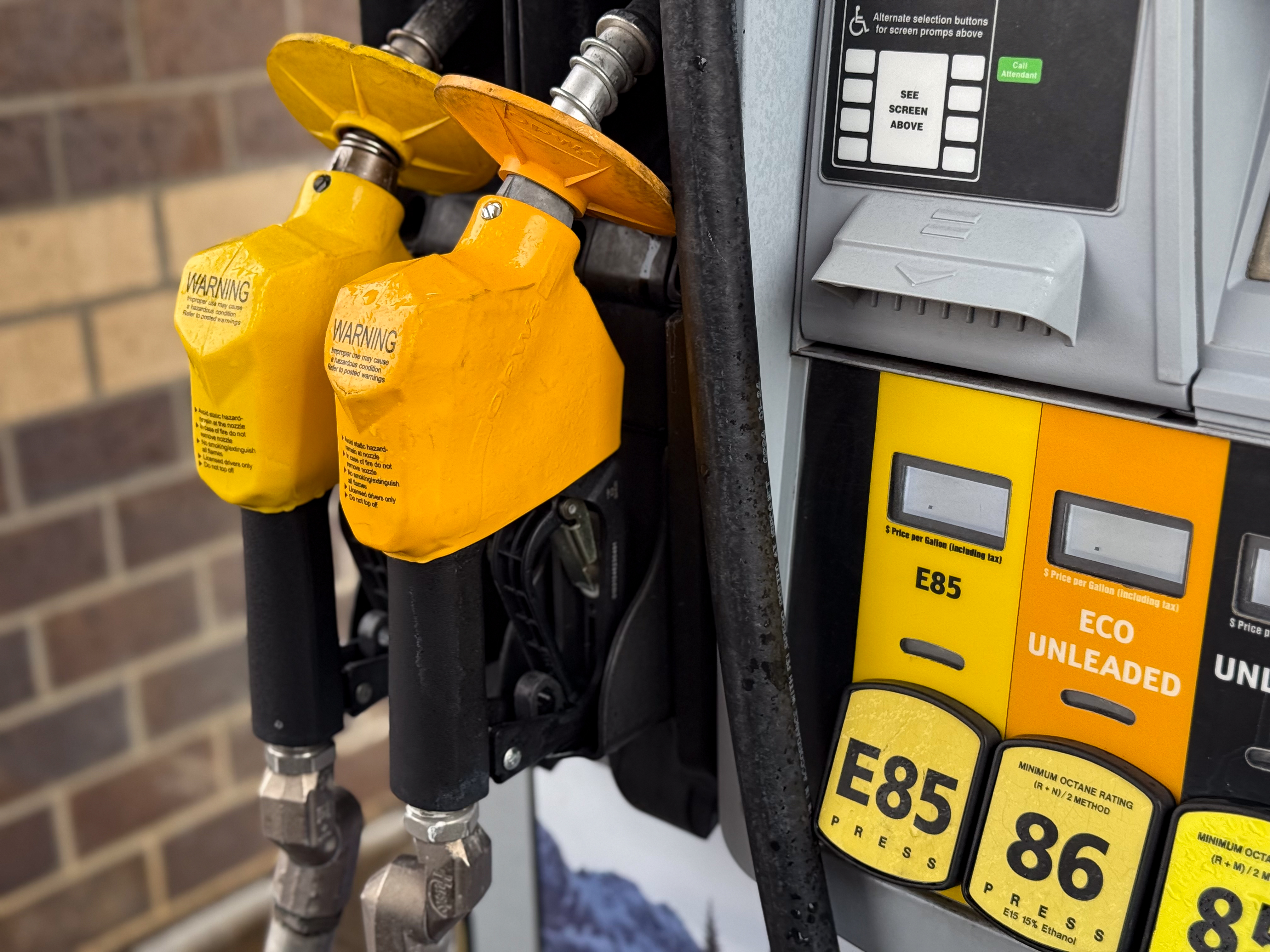
Mason-area drivers will pay less at the pump starting Sunday, Oct. 4, after Gov. Mike DeWine signed a 90-day suspension of Ohio's state gas tax into law.
DeWine signed House Bill 519 on Thursday, Oct. 1, one day after the Ohio General Assembly passed it in an emergency vote. The law eliminates Ohio's 38.5-cent-per-gallon gasoline tax and 47-cent-per-gallon diesel tax through Jan. 2, 2027, reducing both to a fraction of a penny.
The nonpartisan Legislative Service Commission estimated the average driver could save as much as $55 over the three-month period, cleveland.com reported. Other estimates put the per-fill-up savings between $3 and $7.
The savings won't appear all at once. Patrick De Haan, head of petroleum analysis at GasBuddy, told NBC4 that stations still have fuel purchased at the taxed rate. He expects prices to drop 5 to 10 cents starting Sunday and continue falling daily, with most of the impact reaching pumps by around Saturday, Oct. 10.
"I would say the 10th of October, you'll probably see most of the impact having reached the retail level," De Haan said.
Ohio's average gas price hit $4.24 per gallon on Wednesday, Sept. 30, according to AAA. The Dayton-area average stood at $4.12 for regular and $6.61 for diesel as of Thursday, Oct. 1. AAA does not publish Mason-specific prices.
State Rep. Adam Mathews, a Lebanon Republican who represents Ohio House District 56 covering Mason and central Warren County, voted for the bill on Wednesday, Sept. 30. In a statement that day, Mathews said the state's fiscal stewardship put Ohio in position to provide "instant relief for everyday Ohioans."
The House passed H.B. 519 by a vote of 78-16. The law requires gas stations to pass the full tax savings on to customers. Stations that fail to do so face a licensing inquiry by the Ohio Tax Commissioner, which can be referred to the attorney general, according to the Cincinnati Enquirer.
Still, lawmakers from both parties acknowledged the full 38.5 cents may not reach consumers. Senate President Rob McColley told the Dayton Daily News he expects 80% to 90% of the savings to reach drivers because of how volatile gas prices can be.
State Rep. Cecil Thomas, a Cincinnati Democrat, voted against the bill. Thomas argued the $726 million surplus could instead address utility bills and property taxes.
The $726 million in general fund surplus will replace the lost gas-tax revenue, keeping road-project funding intact. The federal gas tax of 18.4 cents per gallon remains in place.
The suspension runs automatically through Jan. 2, 2027. Any extension would require new legislation from the incoming governor and General Assembly.