Mason's Lindner Center of Hope will begin training two clinicians to treat obsessive-compulsive disorder through a new one-year fellowship launching at the end of August, aiming to address a national shortage of OCD specialists that leaves an estimated 95% of patients without the most effective treatment.
The OCD and Anxiety Fellowship Program pairs the two fellows with three faculty members who have more than 50 combined years of experience treating OCD, according to the center's announcement published Aug. 17. Each fellow will spend roughly 10 hours per week in specialized education, clinical training, supervision and hands-on experience.
The weekly schedule includes OCD rounds, group supervision with didactic learning, co-facilitation of an outpatient OCD group, co-facilitation of a Radically Open Dialectical Behavior Therapy group, individual supervision and shadowing faculty therapy sessions. Fellows will also co-lead an anxiety group at Sibcy House, the center's residential program.
Who qualifies
The fellowship is open to two tracks: dependently licensed clinicians already working in residential, inpatient, partial hospitalization or intensive outpatient settings, and independently licensed clinicians or post-doctoral psychology fellows whose roles span residential and outpatient services.
Why it matters locally
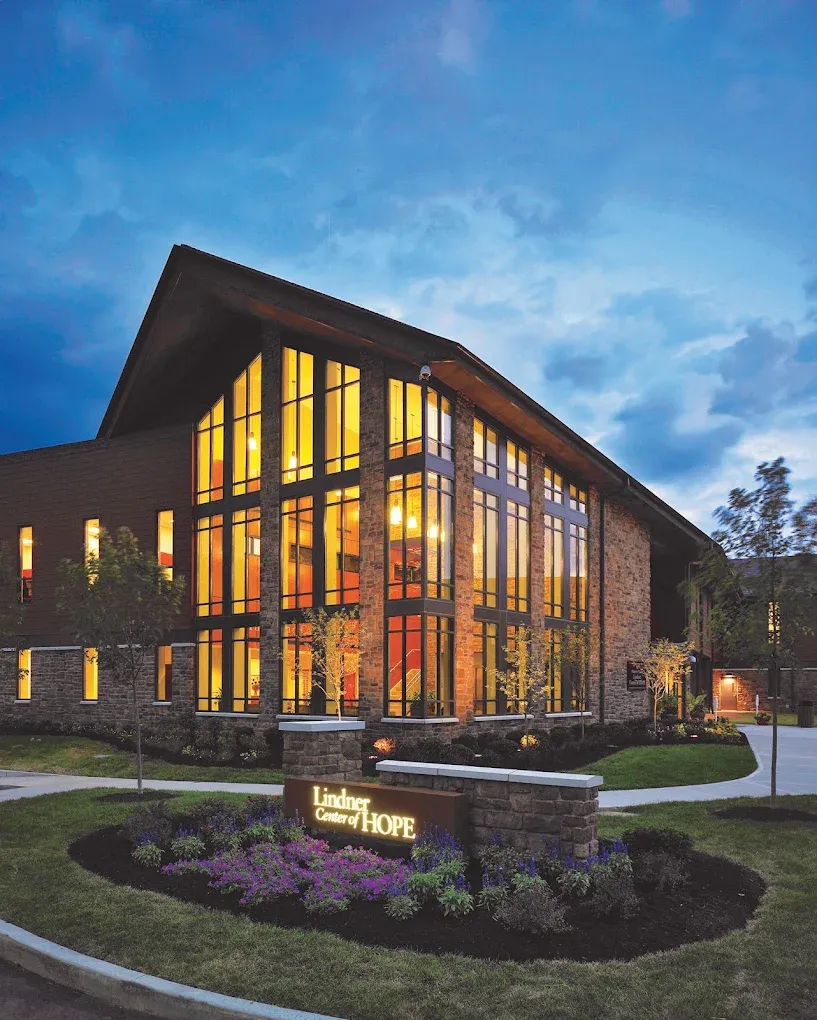
The program arrives as the nonprofit, located at 4075 Old Western Row Road, undergoes its largest-ever physical expansion. A $20 million, four-story addition of approximately 70,000 square feet is under construction at the campus, according to a March 2025 City of Mason building permit. Ohio Gov. Mike DeWine committed $4 million in state funding at a June 2025 groundbreaking, and construction was expected to take 18 months. The new building will house corporate staff, outpatient services and training space.
A December 2025 study by the International OCD Foundation found that up to 10 million Americans live with OCD, yet only one in six receive a correct diagnosis. Rebecca Deusser, the foundation's executive director, said in December 2025 that "treatments exist that help many people with OCD live productive, fulfilling lives, yet millions are suffering needlessly."
The Lindner Center described the fellowship as an investment in building the future OCD workforce. More trained clinicians, the center said, could lead to growth in its outpatient programs.
Funding and next steps
The center is seeking philanthropic support to cover the fellowship's annual costs, including the faculty time required for intensive supervision. No specific dollar target has been disclosed.
The fellowship is a pilot program with no announced timeline for future cohorts. Construction on the 70,000-square-foot addition that will expand the center's training capacity is expected to wrap up by late 2026.